The Other Revolution
Approaches to the Avant-Garde, Soviet Cinema and Theatre of the 1920s (Part 6b)

Theater in Film: Eisenstein, Vertov, and FEKS (cont.)
Popular Culture – Cinema – Futurism – Americanism
We generally agree with the theses of John Docker and other authors when they highlight the connection between the nascent cinematic medium—a medium still in the process of transformation and striving for recognition as a legitimate "art form" during the period in question—and the underground currents of popular culture. This is the same popular culture that cultural modernism scorns and disparages, with its appeals to the exalted canon of the arts and to an enlightened minority, in contrast to the maelstrom of jazz music, vaudeville, circus acts, “pulp” books and magazines, and other cultural forms embraced by the great masses—masses perhaps rebellious (or more likely indifferent) to the tantrums of the mandarins and philosopher-kings of High Culture.
“Cinema was considered a fairground attraction, fascinating due to a series of tricks that Méliès explored between 1901 and 1906 with his A Trip to the Moon and The Kingdom of the Fairies, among other films. Jean Mitry compares the films of those years to farce or burlesque drama (...). Illusionism, entertainment, and costumbrismo dominated the screens, placing cinema squarely within the realm of ‘popular’ spectacle.”
(Morales Astola, 2003: 23)
The theatrical ancestors of the new medium were not the typical realist works of the 19th century (the standard products of high culture), but rather the spectacular, the carnivalesque, the excessive—elements so thoroughly studied by Bakhtin and rehabilitated by postmodern criticism:
“Cinema and television inherited, developed, and transformed theatrical forms from the 19th century and earlier. This theater was not dominated by realism (...), it was composed of melodrama, romance, vaudeville, farce, adult pantomime, nautical comedy, fantasy, magic, Shakespearean adaptations, and other unrealistic products.”
(Docker, 1994: 66)
The avant-garde’s attitude toward cinema, at least in the beginning, thus revolved around the idea of cinema as a non-art—judged as such both because of the nature of its contemporary output (cheap and fit for the fairgrounds, incomparable with “Great Art”) and because of its mechanical character, which led to associations with photography and with the “pure” reproduction of reality, a reproduction that, as such, was perceived as a negation of creative possibility. But not all avant-gardes reacted the same way. It is worth noting the special hostility of the Anglo-Saxon world, as opposed to the more receptive attitude of Futurism (both Russian and Italian), which aligned with Futurism’s exaltation of progress, the machine, and new media.
We find arguments of this kind in Mayakovsky’s early writings:
“Can cinema be an independent art? Of course not. Beauty does not reside in nature; only the artist can create it... Only the artist extracts artistic images from real life, and all that the cinematograph can hope to do is to multiply, more or less successfully, these images. For this reason, I can only proclaim myself an enemy of its rise. Cinema and art are phenomena of a different order.”
(Fernández Santos, 1974: 32–33)
In his early days, Meyerhold shared this skepticism, recognizing only two valid cinematic paths—the scientific path of the Lumière brothers or the spectacular one of Méliès, neither of which he considered, properly speaking art:
“1. Its usefulness is strictly limited to science.
2. It has no value for theatrical aesthetics, not even as a technological complement to the stage.
3. Its naturalistic style blinds those who view it as a mechanical and objective method for recording reality.
4. It is related to photography (which is not an art), and not to theater (which is).”
(Morales Astola, 2003: 24)
The turning point—or rather, turning points—that would transform this attitude were the two films by D. W. Griffith: The Birth of a Nation (1915) and Intolerance (1916). Despite earlier precedents, it was these two works that, for many, conferred upon cinema the status of a serious linguistic medium, thanks to their complex combination of photographic, theatrical, and literary codes, orchestrated and selected by the camera, and their astonishing diegetic structure, particularly evident in Intolerance.
The impact of this new medium on the Soviet avant-garde, heavily indebted to Futurism, was immense. We have already discussed the cases of Meyerhold and Eisenstein in previous sections. The multifaceted Mayakovsky—poet, painter, journalist, and playwright—was also captivated by the medium. However, despite his genius, he was unable to find great success in cinema, achieving only failures and partial victories.
In the pre-revolutionary period, Mayakovsky wrote several scripts and appeared in some short films and documentaries on the Futurists: The Moscow Futurists and A Drama at Futurist Cabaret No. 13. In the first months after October, while private film companies were still active, he made three films with the Neptune studio:
Not Born for Money, inspired by Jack London’s Martin Eden. Mayakovsky plays “Ivan Nov,” a Futurist genius, and changes the tragic ending of the novel into one of renunciation: “he leaves his top hat on a symbolic skeleton, regains his freedom, and—like Chaplin—sets off along a road leading to infinity”
(Fernández Santos, 1974: 43–44)The film, shot with little fanfare by Turkin, who did his best to tone down the script’s eccentricities, was followed by:
The Damsel and the Hooligan, based on a text by De Amicis. Mayakovsky plays a young ruffian from a working-class neighborhood who falls in love with a schoolteacher and is gravely wounded defending her honor.
Chained to the Screen, the last of the 1918 films tells the story of a poet-artist who falls in love with a dancer that steps out of the celluloid and into his life.
After these early ventures, Mayakovsky’s active involvement in film ceased. Time, bureaucracy, and the marginalization of the Futurists prevented him from advancing projects in the medium. The journal LEF, which he directed, became a vanguard platform for film theory, hosting contributions from major creators like Eisenstein and Vertov. Mayakovsky would write several scripts (The Children, The Elephant and the Match, The Story of a Gun, Forget the Chimney), some of which were of considerable quality (The Heart of Cinema, How Do You Do?), but only minor projects reached the screen, handled by mediocre directors. He had better success in theater, where Meyerhold would end up staging all his plays.
Returning to the essay by Silvestra Marinello mentioned earlier in this article, two elements are key to understanding many aspects of Soviet culture and cinema of this era: the appropriation of Intolerance and the phenomenon of Americanism.
Intolerance was not only a landmark for the new Soviet filmmakers and the avant-garde. From its Russian premiere in 1916, it was immensely popular and had a thunderous impact on future Revolution leaders. On November 17, 1918, a special screening was held for an audience of government officials, including People’s Commissar of Enlightenment Lunacharsky.
Despite the admiration it inspired, Intolerance presented several ideological problems—its cyclical view of history and plea for tolerance clashed with the revolutionary violence and progressive historicism of Marxist philosophy. These tensions were mitigated by the addition of a spoken prologue that emphasized the film’s themes of social justice, reframing Griffith’s narrative along Marxist lines: “The recurring epochs of Intolerance were reinterpreted, with the added spoken introduction, as the prehistory of the Revolution”
—(op. cit., p. 221).
In this new version, the film was screened at the 1921 Congress of the Communist International, where it served as a model for the new Soviet cinema.
Parallel to this appropriation was the phenomenon of Americanism: in contemporary Soviet culture, the United States became a powerful, though contradictory model. America stood as a myth of progress, modernity, and industrialization, which Soviet Russia aspired to—willfully ignoring the flaws inherent in the capitalist mode of production:
“America is the land of skyscrapers, of glass buildings, of iron bridges (...); it is the land of automobiles and machines, of the emerging mass literature and of cinema. Pragmatism is its most relevant philosophical expression. The most widespread literary forms are the short story and the adventure novel, while the psychological novel has no audience. Literature is produced in series; genres are consolidated.”
(op. cit., p. 225)
This phenomenon affected all of Europe, but especially the Soviet Union, given its rupture with the prerevolutionary past and its progressive utopianism. In old Europe, the Americanized masses were often viewed with scorn and arrogance by ruling elites and much of the intellectual class, defenders of elitism and secular cultural traditions (with a few avant-garde exceptions, such as Italian Futurism and Le Corbusier’s utopias). In contrast, the Soviet avant-garde and leadership plunged eagerly into this cultural magma: avant-garde manifestos exalted progress and cinema; Jack London became an inspirational figure in numerous projects and screenplays.
Still, this absorption was not free of complications. On more than one occasion, spectacles intended to ridicule capitalism (like Meyerhold’s production of Lake Lyul) inadvertently became showcases for the West, jazz, consumer culture, and fashion. The same contradiction appears in Eisenstein and Mayakovsky, whose fascination and critique towards American culture go hand in hand.
Nonetheless, a more open attitude toward mass culture and its products emerged in the Soviet Union during these years—including a new approach to native cinema. While propagandistic, it no longer looked down on the melodramatic and “popular” resources of American cinema, as opposed to the “culturalist” approach of European productions. This was happening just as the first initiatives of normalization, canonization, and partial absorption of cinema into “high culture” were beginning to take shape.
Two Positions, One Debate: Eisenstein and FEKS vs. Dziga Vertov
1922 is a year of manifestos. Soviet film production was still in its infancy, but the young people (almost all under 20) who would soon become the “great directors” of Russian cinema were already staking out positions, firing bullet-like ideas from the barricades of the printed pages (a rather scarce at the time) in which they publish their manifestos.
Two important texts appear: the Manifesto of Eccentrism, in Excentropolis (formerly Petrograd), is the first declaration by a group of young filmmakers, the Ukrainians Grigory Kozintsev and Leonid Trauberg, the St. Petersburger Yutkievich, and the older Georgy Krizitsky. We can consider the newly founded Factory of the Eccentric Actor (FEKS) to be the “Petersburg sister” of the work Eisenstein is undertaking at the same time in Moscow. Their objectives and theoretical references are, in fact, the same:
I. THE KEY TO FACTS
YESTERDAY: comfortable studies, clear foreheads. They reasoned, decided, thought.
TODAY: the Signal! To the machines! Belts, chains, wheels, hands, feet, electricity, the rhythm of production.
YESTERDAY: museums, temples, libraries.
TODAY: factories, workshops, shipyards.YESTERDAY: European culture
TODAY: American technique.
Industry, production under the starred banner. Either Americanization or the funeral parlor.YESTERDAY: Salons. Bows. Barons.
TODAY: Street vendors’ cries, scandals, the cop’s club, noise, shouts, stomping, running.
Rhythm of today: The rhythm of the machine, concentrated by North America, introduced into the life of the boulevard.
(“Manifesto of Eccentrism”, in VV.AA, 1988: 46)
Their proposals are steeped in Futurist imagery (Mayakovsky will serve as both model and emblem for these artists), in a clear rejection of the traditions of a past that are to be overcome. America and progress are the model to follow, appropriating its technique in opposition to the musty, decadent knowledge of Europe. This embrace of Americanism cites as models its most popular products: cinema and its stars, jazz, pulp fiction.
II. ART WITHOUT CAPITAL LETTERS, WITHOUT A PEDESTAL, AND WITHOUT A FIG LEAF
Life demands an art
Hyperbolically rudimentary, astonishing, that electrifies the nerves, openly utilitarian, mechanically exact, instantaneous, fast.
Otherwise, it won’t be felt, won’t be seen, won’t stop anyone.
All this, in short, equals: 20th-century art, 1922 art, last-second art.
Eccentrism.
(op. cit., p. 46)
This calls for control and mechanization of bodily movements, rhythm and speed reminiscent of Meyerhold’s biomechanics and the “productivist” and “constructivist” projects of a utilitarian, practical art, stripped of ornament and flourish.
III. OUR FATHERS
Parade-allez!
In the word: the song, Pinkerton, the street vendor’s cry, the curse.
In painting: the circus poster, the cover of the popular novel.
In ballet: American dances from the café-chantant.
In theater: the music hall, cinema, circus, café-chantant, boxing.
(op. cit., p. 46)
To these we could add other pointed, telling examples: “We prefer Chaplin’s butt to Eleonora Duse’s hands!”, “Nat Pinkerton, the king of detectives”, “our friend, the clown Boklaro (N.N. Evreinov)”. Merciless mockery is directed at the theater (and art) of the past, seen as mimetic (targeting Stanislavskian naturalism) and long surpassed by modern advancements. Lunacharsky cried out in indignation: “For theater as such, this is either a fall or an occupation of its territory by the excentrism of the music hall.”
Before The Adventures of Oktyabrina was even conceived, FEKS staged as their first play a free adaptation of Gogol’s Marriage:
“The structure of the show, which included elements of circus, cabaret, and cinema, was built on the fly and modified whenever we thought it had aged (...). We piled up individual elements without worrying about the whole. I believe it was the first time that films and live actors were mixed (...). At the edge of the proscenium, a young man with a wide forehead and curly hair urged us on, dominating the din: ‘Too slow!’ he shrieked, with a high, not yet fully developed voice. ‘Way too slow! Speed up those movements!’ That was Sergei Eisenstein.”
(in VV.AA, 1975: 127–128)
Much later, Kozintsev and Leonid Trauberg’s cinematic adaptation of Gogol’s The Overcoat would coincide in time and tone with Meyerhold’s production of The Inspector General.
But within the cinematic avant-garde, we also find a more radical response to the legacy of theatrical past—such is the stance of Dziga Vertov and the Kinoks in their foundational text: “WE: A Variant of a Manifesto”, published in Kinophot in 1922. Some passages are especially telling of their program:
“We call ourselves Kinoks to distinguish ourselves from ‘filmmakers,’ a bunch of peddlers barely managing to hide their antiques (...). The Kinok thanks the American adventure film, full of spectacular dynamism, with American staging à la Pinkerton, fast image flow, close-ups. It’s good, but disorganized, not based on the precise study of movement. A step above the psychological drama, but lacking a foundation. Trite. A copy of a copy.
WE declare that the old narrative films, dramatized and so on, are leprous.
– Don’t go near them!
– Don’t look at them!
– Danger of death!
– Contagious!”
(Vertov, 1974: 153)
Despite sharing similarities with Eisenstein and the FEKS in their critique of traditional mimesis, the Vertovian program goes further: it harks back to the earliest avant-garde attitudes toward cinema—either the spectacular line of Méliès (followed to some degree by the Excentrists, early Eisenstein, and Meyerhold), or the “documentary” line of the Lumières, which the Kinoks reclaim as their own. Their uncompromising stance looks for a cinematic being rooted in the rhythm of images—a kind of formalist exercise. Cinema is the art of imagining the movements of things in space:
“WE call:
– to flee – from the sweet embraces of romance,
– from the poison of the psychological novel,
– from the theater hug of the lover,
– to turn our back on music,
– to flee – toward the vast space, the space of four dimensions (3 + time),
in search of a material, a metric, and a rhythm entirely our own.”
(op. cit., p. 154)
Vertov’s later development of the “kino-eye” and “life caught unawares” would only reinforce this hostility to “acted” cinema and to “human” or “theatrical” views of the camera. After all, “The kino-eye is what the eye does not see, like the microscope or the telescope of time” (op. cit., p. 188). The power of the camera (metallic eye) and of montage is often emphasized:
“I am the kino-eye. I am a builder. I have placed you, whom I have just created, in an extraordinary room that did not exist before and that I also created. In this room there are twelve walls I took from different parts of the world (...). I, kino-eye, create a man far more perfect than Adam, I create thousands of different men from various blueprints and drafts.”
(op. cit., p. 163)
From various platforms (including the journal LEF), Vertov’s proposals launched passionate attacks against a cinema that was gaining traction and marginalizing his own work. The defeat would be merciless, culminating in a realist, didactic cinema, reducing Vertov to the margins, a simple documentarist, “desperately knocking at the gates of the Stalinist Bureaucracy’s Castle.” But in the 1920s, the battle was still far from over (though the balance of forces and the early successes of “acted” Soviet cinema were beginning to determine the outcome).
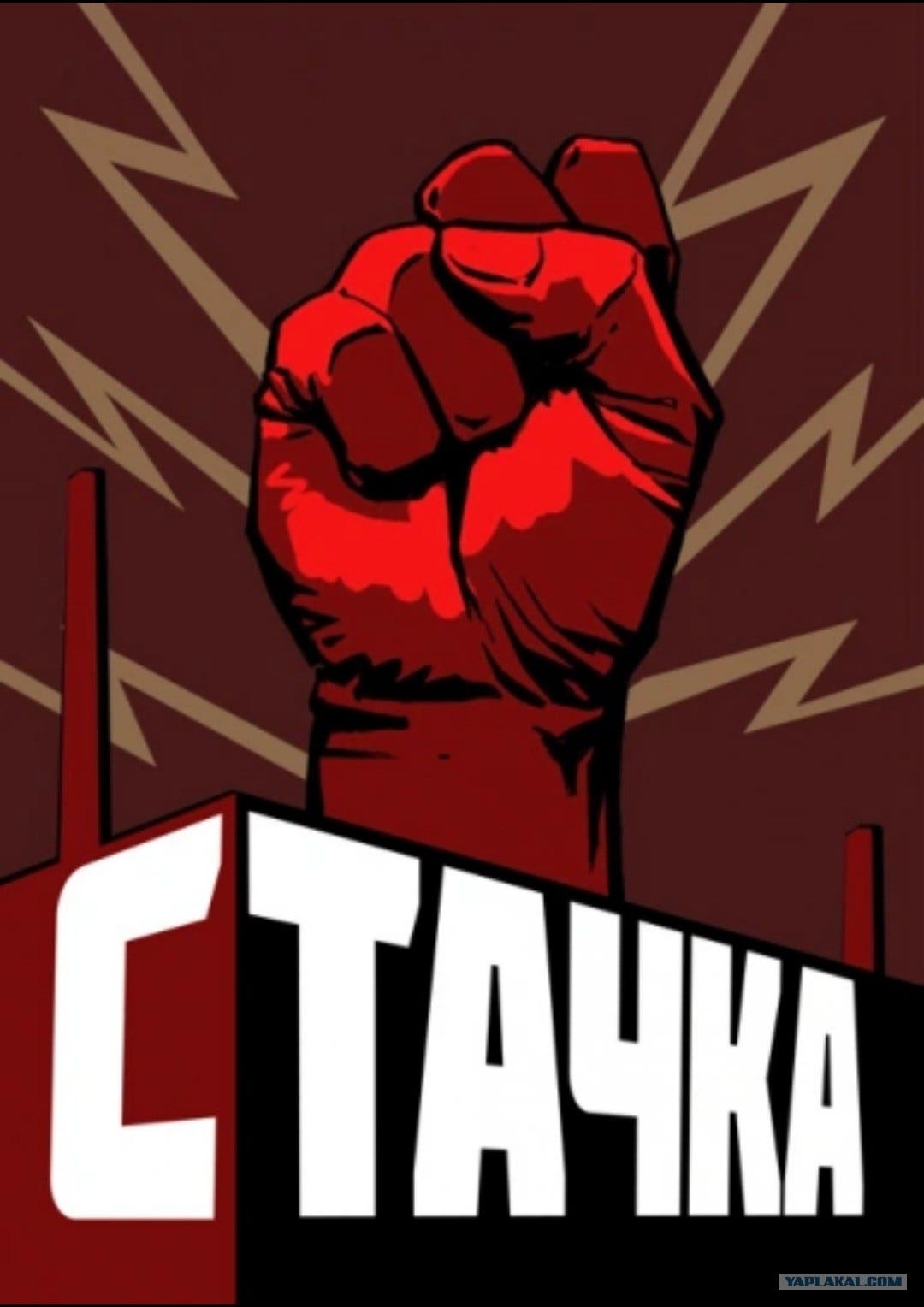
The release of Strike by a very young Eisenstein only intensified the polemics: the film was attacked from both the “right” (by Proletkult, co-producers of the film, who denounced its “formalism”) and the “left”, i.e., Vertov and the Kinoks. The article “The Factory of Facts” makes their position clear:
“The growing use of kino-eye techniques by ‘acted’ film (Strike, Potemkin) is nothing but a particular case, a fortuitous movement of the kino-eye in full development. But that is another problem. I won’t deal with it now.
In what time, by what paths, and at what cost of disillusionment will the proletarian spectator finally understand that the actor-film, decrepit and degenerate, is impossible to save—even by regular injections of kino-eye—only the future can say.
... Tempests of facts! Masses of facts. Hurricanes of facts. And small scattered facts.
Against witchcraft-cinema. Against hoax-cinema.”
(op. cit., pp. 205–6)
Strike was Einsentein’s first film, containing all the seeds of his later work. Much has been written about its collective protagonism, the acrobatics and chases in the factory, and the clear traces of his theatrical background. The montage of attractions builds the film’s reels in a tragic crescendo culminating in the final massacre of the workers. The “types” model shows stark class divisions:
“On one side stand the forces of capital, first personified by the factory boss, obese and wearing a top hat (...).
Alongside the capitalist and his lackeys are the police, with their flock of spies, and the lumpenproletariat (...).
These forces are presented across a spectrum of schematic types: from the realistic (the police) to the caricatured (the capitalist and his team), the grotesque (the animalistic spies), and the circus-like (the tramp king and his entourage).”
(Bordwell, 1999: 74)
In contrast, the workers, as in Mystery-Bouffe or Roar, China! by Tretyakov, are heroic-realism models: athletic, healthy bodies with little individualization.
Following the model of agitational theater and film and Pavlov’s reflexology, the film seeks to act directly on the viewer, to agitate and mobilize them. This goal is supported by intelligent use of intertitles and imagery:
“‘Preparation’ denotes the activities of workers and police agents. ‘Hit him!’ appears in scenes where captured workers are dragged off (...).
Sometimes characters look directly at the camera, in confrontational reverse shots or addressing the audience.
The film ends with a close-up of two eyes and the title: ‘Proletarians, remember!’
This final appeal was a Civil War theater convention: at the end of Do You Hear, Moscow?, the protagonist shouted the title at the audience.”
(op. cit., p. 78)
The “attractions” and powerful non-diegetic metaphors are meant to impress—like the controversial final sequence, intercutting the massacre of workers with the butchering of a bull:
“The workers are ‘sacrificed’ figuratively, and the metaphor gives the soldiers’ actions the connotation of an impersonal and efficient slaughter. Montage develops the conceptual parallels: when the soldiers fire, blood gushes from the bull.”
(op. cit., p. 83)
This is a translatio of the decapitations and electrocutions of the Grand Guignol, now serving propaganda goals.
The response to the critics came in Eisenstein’s article “Towards a Materialist Approach to Form”, in which he hails his film as a “formal ideological victory.” A formal victory achieved through appropriate technical methods, leading to a new vision and approach to things and phenomena—misunderstood by professional critics, who “can’t see past the end of their noses, i.e., in this case, my ‘eccentrism’.”
He continues with a swaggering proclamation: “Strike is the October of Cinema.” Then comes his response to Vertov, whom he acknowledges only as a precursor in his Kino-Pravda. But Kino-Eye, he claims, is “an absurd reduction of technical methods valid only for newsreels (...). In practice, it’s just a negation of a partial aspect of cinema, shot with a ‘rampaging camera’.”
True to agitation and propaganda, Eisenstein aims to work the viewer’s psyche, dismissing Vertov’s proposals as primitive impressionism, which ultimately forces Vertov to use montage and tricks too—leading, in Eisenstein’s view, to his inevitable conversion into a director, and maybe even into an artist.
The final, poetic and defiant lines of the article point toward a future direction for Soviet cinema—one that would ultimately devour even its author. Behind the rhetoric and demagoguery of an agitational cinema (Eisentein’s own) lurks the specter of Socialist Realism, which would tame and subsume the avant-gardes, including their greatest representative:
“Soviet cinema must smash skulls!
And not ‘through the united gaze of millions of eyes will we fight the bourgeois world’ (Vertov)—
they’ll just plant a million candles under those eyes.
Smash skulls with the cinema-fist, pierce them until final victory, and now, in the face of the threat of contamination of the revolution by the petty-bourgeois ‘everyday’ spirit, smash harder than ever.
Long live the cinema-fist!”